I’m Participating in the Arduino Physical AI Challenge India 2026 — Here’s Why This Competition Changes Everything
If you’ve been following my journey in robotics and AI, you already know I don’t just write about this stuff — I build it. So when I heard about the Arduino Physical AI Challenge India 2026, I didn’t think twice. I registered. And in this post, I want to tell you exactly what this competition is, why it’s a massive deal for the Indian maker and robotics community, and what I’m planning to build.
Buckle up — this one’s exciting.
What Is the Arduino Physical AI Challenge India 2026?
The Arduino Physical AI Challenge India 2026 is India’s biggest hardware AI competition of the year, organized by Robu.in — one of India’s most trusted electronics and robotics stores — in collaboration with Arduino and Qualcomm.
The challenge is built around one core idea: Physical AI — which means AI that doesn’t just run in the cloud or on a screen, but AI that interacts with the real, physical world through sensors, motors, actuators, and robots.
The competition is open to students, makers, hobbyists, and startups across India. Whether you’re a college student with a half-built robot in your hostel room or a professional tinkerer with a garage full of components — this competition was made for you.
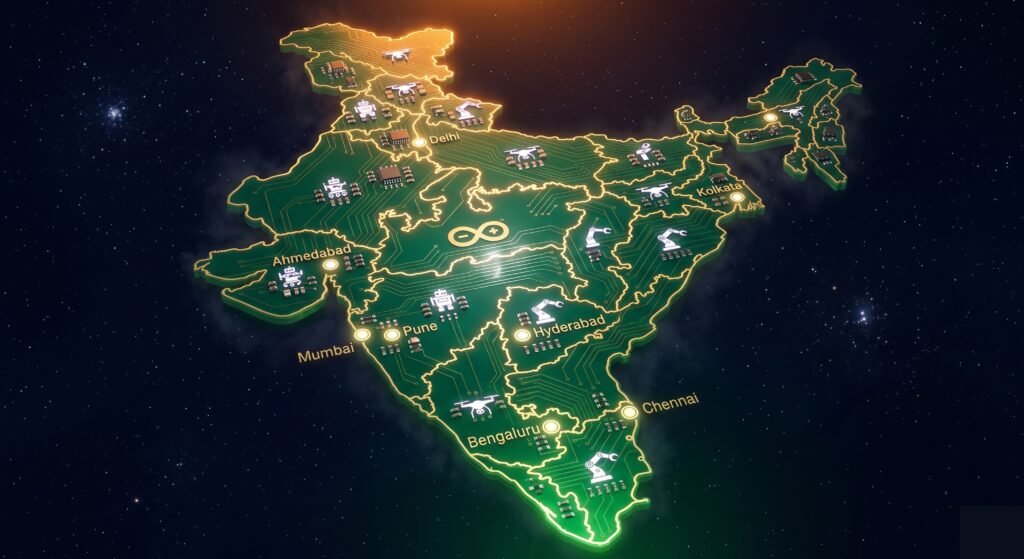
The Prize Pool: ₹30 Lakhs+
Let’s talk about what’s on the table — because this isn’t a small college fest trophy situation.
The total prize pool is over ₹30,00,000 (30 Lakh Rupees) — making it one of the highest-value hardware competitions India has ever seen. The prizes include:
- 🥇 Gold Prize: ₹2,50,000 cash
- 💻 Snapdragon AI Laptop for top performers
- ✈️ Free mentorship from industry experts
- 🏆 Snapdragon devices, recognition, and more across multiple categories
This is not just a competition — it’s a launchpad. Winners get visibility, mentorship, and tools that can kickstart real careers or products.
The Star of the Show: Arduino UNO Q
At the heart of this challenge is the Arduino UNO Q — one of the most powerful maker boards ever released.
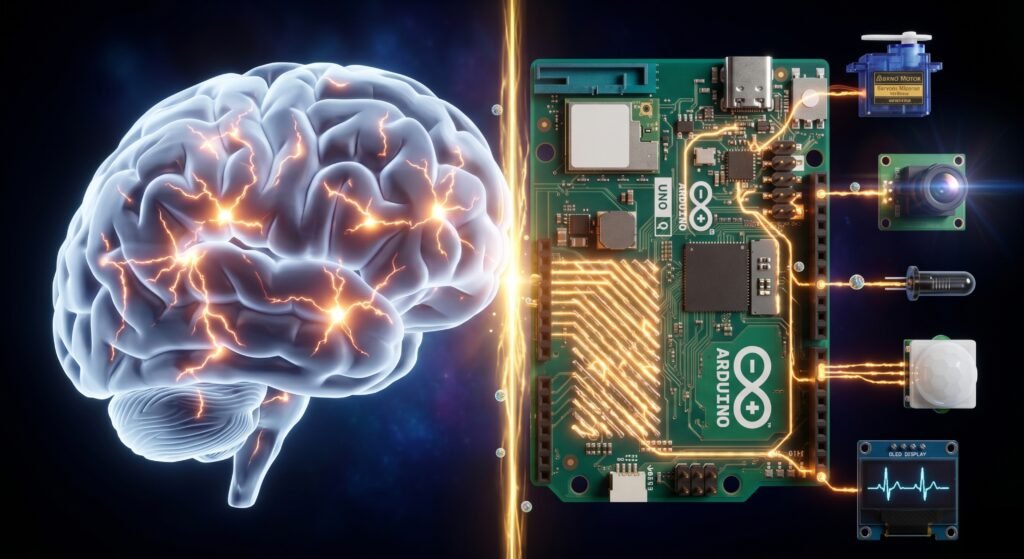
What makes the UNO Q special? It has a dual-brain architecture:
- Qualcomm Dragonwing QRB2210 processor running Linux — handles AI inference, edge computing, and connectivity
- STM32 microcontroller — handles real-time motor control, sensors, and actuators
This means the UNO Q can think like an AI computer and react like an embedded system — at the same time. You can run computer vision models, voice recognition, or machine learning inference on one core, while simultaneously controlling servos, reading sensor data, or driving a robot on the other.
For anyone building Physical AI projects — this board is a game changer.
Why “Physical AI” Is the Most Important Skill of 2026
Most people think of AI as something that runs on servers, answers questions, or generates images. But the most impactful AI of the next decade will be Physical AI — AI systems that operate in the real world.
Think about:
- A robot arm that visually inspects parts on a factory line
- A smart helmet that detects whether a rider is wearing it before allowing ignition
- A walking stick that monitors your heart rate and predicts falls using AI
- A drone that autonomously navigates a disaster zone without GPS
These aren’t concepts from a sci-fi movie. These are real projects that Indian students already built at the Arduino x Qualcomm AI Innovation Challenge at the India AI Impact Summit 2026. And they built them on the Arduino UNO Q.
The Arduino Physical AI Challenge India 2026 is the next, bigger stage for exactly this kind of innovation.
Who Should Participate?
This competition is for you if:
- You’re a student in engineering, computer science, electronics, or any STEM field
- You’re a maker or hobbyist who builds things with Arduino, Raspberry Pi, or similar platforms
- You’re a startup founder working on hardware, robotics, or AI products
- You love building things and want your work to be seen, judged, and rewarded at a national level
You don’t need to be an AI expert. You don’t need a PhD. You need curiosity, creativity, and the drive to build something real.
What Am I Building?
I won’t give away all the details just yet — the competition is live and I’m keeping some cards close to my chest! But here’s what I can tell you:
My project sits at the intersection of robotics, AI, and real-world problem solving. I’m using the Arduino UNO Q as the brain, combining edge AI inference with real-time physical control. The project is designed to solve a practical problem that’s relevant to everyday life in India — not just a lab demo, but something with actual impact.
I’ll be documenting the entire build process here on this blog — the components I choose, the challenges I face, the code, the failures (yes, there will be failures — that’s how we learn), and ultimately the final submission.
Subscribe to the blog so you don’t miss a single update.
How to Register
If this post has sparked something in you — don’t wait. Registration is live right now.
👉 Register here: robu.in/arduino-physical-ai-challenge-india-2026
The registration window won’t stay open forever. If you’ve been sitting on a project idea, now is the time to act.
Final Thoughts
India’s maker and robotics community has always had talent. What it has sometimes lacked is a big, well-supported, well-rewarded stage to showcase that talent.
The Arduino Physical AI Challenge India 2026 is that stage.
With ₹30L+ in prizes, backing from Arduino and Qualcomm, and a category that’s shaping the future — Physical AI — this competition matters. Whether you win or not, the act of building, submitting, and competing will make you a better engineer, a sharper problem-solver, and a more visible member of this incredible community.
I’m in. Are you?
Follow this blog for weekly updates on my build journey, tips for your own project, and deep dives into the tech behind Physical AI, or Tech news, or Tech updates.
Arduino Physical AI Challenge India 2026 prize money, how to build a physical AI project with Arduino UNO Q, best robotics competition for engineering students India 2026, Arduino UNO Q, how to register for Arduino Physical AI Challenge 2026, what is physical AI and how does it work, top hardware AI competitions in India 2026, Arduino UNO Q projects for beginners India, how does Arduino UNO Q dual brain architecture work, edge AI projects using Arduino UNO Q 2026, robu.in Arduino AI challenge registration open, Arduino UNO Q STM32 real time control AI projects.