Introduction
Drone Technology for Students, A decade ago, drones were mostly seen as expensive toys for tech enthusiasts. Today, they are one of the most powerful tools in science, industry, and emergency response. If you are a student or researcher curious about where technology is headed, understanding drones is no longer optional — it is essential.
What exactly is a drone?
A drone, officially called an Unmanned Aerial Vehicle (UAV), is an aircraft that operates without a human pilot on board. It can be controlled remotely by a human operator or fly autonomously using onboard computers and sensors. Modern drones combine robotics, artificial intelligence, GPS, and computer vision to perform tasks that were once impossible or too dangerous for humans.
How drones work — the basics
Most consumer and research drones use four rotors (quadcopters) to achieve stable flight. Here is what powers them:
- Flight controller: The brain of the drone — it processes sensor data and adjusts motor speeds to maintain balance.
- GPS module: Allows precise positioning, return-to-home, and autonomous waypoint navigation.
- Camera and sensors: Used for obstacle detection, mapping, and data collection.
- AI software: Enables object recognition, path planning, and real-time decision-making.
Where drones are making a real difference
Drones are no longer just flying cameras. Their applications span almost every field:
- Agriculture: Farmers use drones to monitor crop health, spray fertilizers, and detect irrigation problems — saving both water and time.
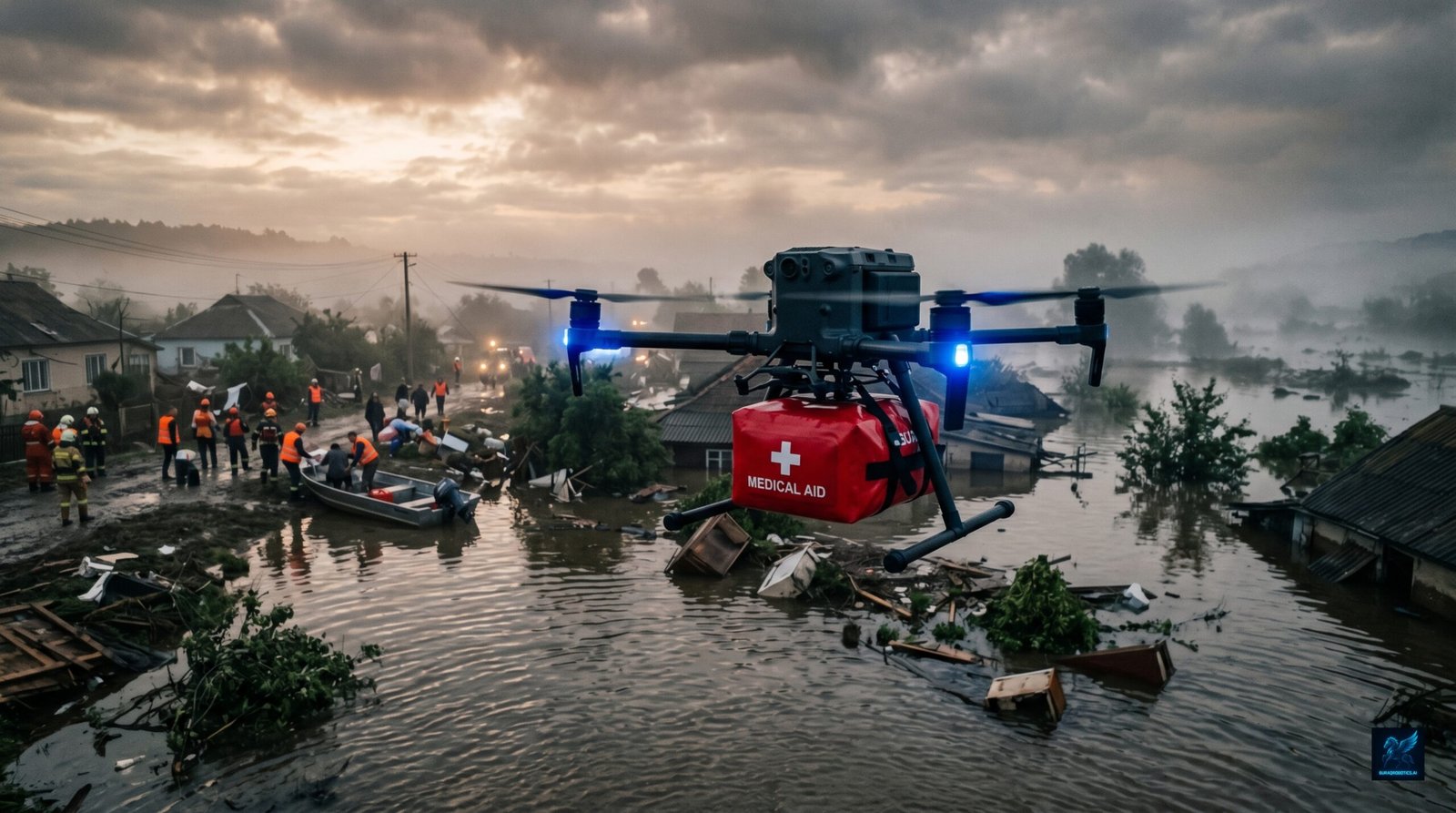
- Disaster relief: After earthquakes or floods, drones map affected areas and deliver medical supplies to places vehicles cannot reach.
- Healthcare: In remote regions, medical drones deliver blood, vaccines, and medicines faster than ground transport.
- Infrastructure inspection: Power lines, bridges, and wind turbines are inspected safely using drones instead of risking human workers at heights.
- Research and science: Scientists use drones to study wildlife, track glaciers, collect atmospheric data, and explore ecosystems unreachable on foot.
AI and drones — a powerful combination
The biggest leap in drone capability comes from artificial intelligence. AI-powered drones can recognize faces, detect anomalies in fields or pipelines, avoid obstacles in real time, and even make flight decisions without human input. Researchers are now training drone swarms — groups of drones that communicate and coordinate with each other like a team — to complete complex tasks autonomously. This is a field wide open for student researchers to explore.
Challenges that still need solving
Despite their promise, drones face real limitations. Battery life remains a major bottleneck — most consumer drones fly for only 20 to 30 minutes per charge. Regulations around drone airspace differ country to country, creating legal complexity for operators. There are also growing concerns around privacy and security, especially with surveillance use cases. These are active research problems — which means exciting opportunities for students.
Why students and researchers should pay attention
Drone technology sits at the intersection of aerospace engineering, computer science, AI, and robotics. Universities around the world are launching dedicated drone research labs. Competitions like the International Aerial Robotics Competition (IARC) give students hands-on experience building and programming autonomous UAVs. Whether your interest is in hardware, software, or policy, drones offer a clear entry point into cutting-edge technology.
What’s coming next?
The near future of drones includes hydrogen-powered long-range UAVs, urban air mobility (think drone taxis), and fully autonomous delivery networks. Companies and governments are already running pilot programs. The students and researchers working on drone technology today will be the ones shaping this future.
Conclusion
Drones have evolved from hobbyist gadgets into serious tools that are reshaping industries and saving lives. For students and researchers, now is the perfect time to explore UAV technology — the problems are hard, the applications are meaningful, and the field is growing fast. Whether you want to build drones, program them, or study their social impact, the sky is quite literally the limit.