
Arduino Physical AI Challenge India 2026 — Build Log Week 4: First Wires, First Tests, First Real Progress
This is Week 4 of my build log series for the Arduino Physical AI Challenge India 2026. If you read Week 3, you know I deliberately slowed down to research and re-scope before building. This week, that planning finally turned into something physical on my desk
From Notebook to Breadboard
Week 3 ended with a clearer, narrower plan and a notebook full of diagrams. Week 4 is where that plan met reality — and reality, as always, had a few things to say about it. This week I moved from planning into active building. Components are wired. The Arduino UNO Q is no longer sitting quietly beside my notes — it’s connected, powered, and running real tests for the first time.
It’s a good feeling. It’s also a humbling one, because the moment you wire something up, every assumption you made on paper gets tested immediately.
What Actually Happened This Week
Here’s the honest breakdown:
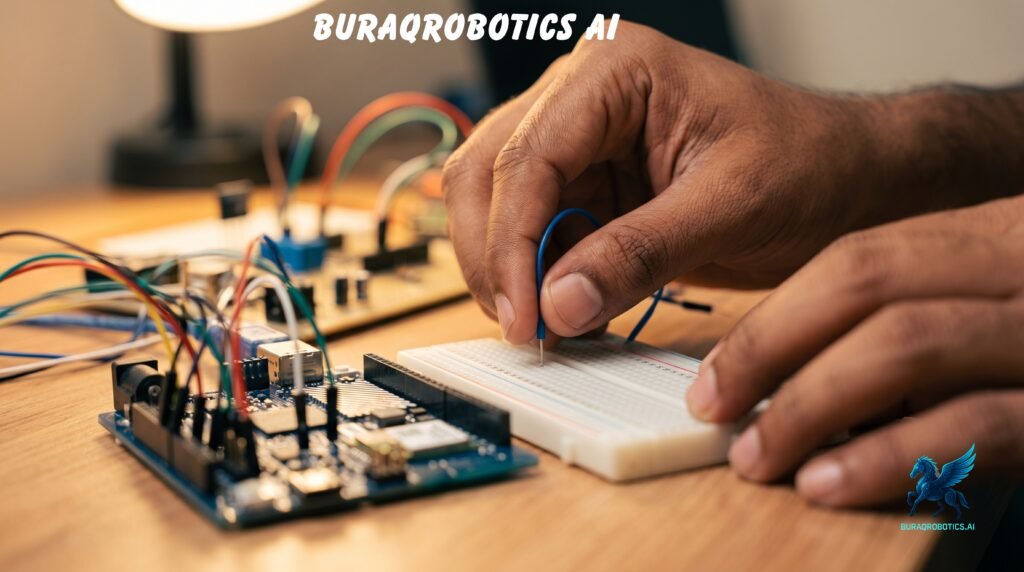
Components wired and powered up.
Everything I researched and finalized in Week 3 — the sensors, the connections, the overall layout — is now physically assembled on my desk. Not in an enclosure yet, not polished, but wired correctly and drawing power as expected. Getting from “diagram in a notebook” to “working circuit on a breadboard” always takes longer than it looks like it should, and this was no exception.
First tests running on the Arduino UNO Q.
With everything wired, I started running basic tests — confirming that sensor readings come through cleanly, that outputs respond the way they should, and that the physical side of the system behaves the way my research predicted. Nothing AI-powered yet. This stage is about making sure the foundation is solid before adding intelligence on top of it.
The Qualcomm MPU vs STM32 MCU split — still being refined.
In Week 3, I researched how to divide my logic between the UNO Q’s two processors. This week, putting that division into practice showed me it wasn’t quite right. Some of what I planned to run on the real-time STM32 side actually makes more sense on the Qualcomm Linux side, and vice versa. This is normal — research tells you the theory, building tells you the practice. I’m still adjusting this split, and I expect it to settle properly once I start the next phase.
Data collection — the clear next step, not yet started.
I haven’t begun collecting the real-world data my AI model will eventually need. That’s intentional. I wanted the physical foundation — the wiring, the sensors, the basic signal flow — to be solid and tested before I start gathering the data that the AI layer will depend on. Garbage in, garbage out applies just as much to Physical AI as it does to any other machine learning project. Getting clean, reliable raw signals first means the data I collect next week will actually be usable.
What I Learned This Week
A few honest takeaways from actually building, after two weeks of mostly planning:
Wiring always takes longer than the diagram suggests.
A connection that looks simple on paper can reveal awkward physical constraints once you’re actually routing wires, managing space, and dealing with real component dimensions. Budget more time for this stage than you think you need.
Processor allocation is a living decision, not a one-time choice.
I thought I had finalized which logic runs on which side of the Arduino UNO Q back in Week 3. Building revealed that the split needs to flex based on what each processor actually handles well in practice — not just what looked clean in a diagram. I’m treating this as an ongoing refinement rather than something I need to lock down perfectly before moving forward.
Testing the foundation before adding intelligence is worth the patience.
It would have been tempting to jump straight into model training this week. I chose to confirm the physical groundwork first. A flaky sensor reading or an unreliable signal path will quietly poison everything built on top of it later — better to catch that now than debug it blind three weeks from now.
Good News on the Calendar — Timeline Update
Before wrapping this update, a quick note for anyone else building for this competition: the organizers extended the timeline since I last wrote about it. The current official schedule is:
- Final registration deadline: 15th August 2026
- Final project submission deadline: 23rd August 2026
- Winner announcement: 31st August 2026
That’s meaningfully more runway than the original schedule gave us. I’m treating this extra time as room to build something more solid and better documented — not as an excuse to slow down. If you’re building for this challenge too, I’d encourage the same mindset.
Where the Project Stands
I’m still keeping the specific technical details of my project private until submission on 31st July — that hasn’t changed.
What I can say: the project has moved from “idea on paper” to “physical system that responds correctly to basic inputs.” That’s a real, if unglamorous, milestone. The core concept from Week 1 — sitting at the intersection of physical systems and on-device AI — remains exactly the same. The implementation details continue to get sharper with every week of actual building.
What’s Coming in Week 5
Next week, the focus shifts to data:
- Beginning real-world data collection for the AI layer of the project
- Finalizing the processor split between the Qualcomm MPU and STM32 MCU based on what Week 4’s testing revealed
- Starting initial experimentation with model training approaches
- Documenting the specific challenges of collecting clean, usable data on a Physical AI system
If Week 4 was about proving the foundation works, Week 5 should be about teaching it to think.
A Note for Other Builders
If you’re building for the Arduino Physical AI Challenge India 2026 and you’re at the stage where your wiring doesn’t quite match your diagram, or your processor split needs adjusting — that’s not a setback. That’s the build process doing exactly what it’s supposed to do.
Research tells you what should work. Building tells you what actually does. The gap between the two isn’t a failure — it’s information. Use it.
Final project submission deadline: 23rd August 2026.
Register here if you haven’t yet: robu.in/register-arduino-physical-ai-challenge
FAQ — Arduino Physical AI Challenge India 2026
Is it normal for your processor allocation plan to change once you start building?
Yes. Dividing logic between the Arduino UNO Q’s Qualcomm MPU and STM32 MCU often looks clean on paper but needs adjustment once real testing reveals which processor actually handles certain tasks more effectively. This is a normal part of the build process, not a sign of poor planning.
Should you test your hardware foundation before starting AI data collection?
Yes — testing sensors, wiring, and signal flow before collecting training data helps ensure the data you gather later is clean and reliable. Building the AI layer on top of an untested physical foundation risks introducing noise that’s hard to diagnose later.
What is the current submission deadline for the Arduino Physical AI Challenge India 2026?
The final project submission deadline is 23rd August 2026. Final registration closes 15th August 2026, and winners are announced on 31st August 2026.
Mohammed is the founder of BURAQROBOTICS AI — an AI, drone, and robotics solutions company in India. Follow this blog for the complete weekly build log series and connect on LinkedIn, Instagram, and Facebook.
Website: buraqrobotics.com
Arduino Physical AI Challenge submission deadline 23 August, Edge AI hardware foundation testing before model training, Arduino UNO Q first test results India 2026, Arduino UNO Q winner announcement 31 August 2026, Arduino Physical AI Challenge India 2026 build log week 4, how to wire Arduino UNO Q for AI project, Arduino Physical AI Challenge build log series India, BURAQROBOTICS AI build log week 4, AI drone robotics founder Arduino challenge journey, India AI robotics startup hardware competition diary,