
Introduction
If you have been following the 2026 Iran war in the news, you have likely heard one drone name mentioned more than any other — the Shahed 136. A slow, cheap, and surprisingly deadly weapon, the Shahed 136 has become the symbol of a new era in military technology. In this post, we break down what this drone actually is, why it matters, and how both the USA and Russia have developed their own versions in response.
What is the Shahed 136?
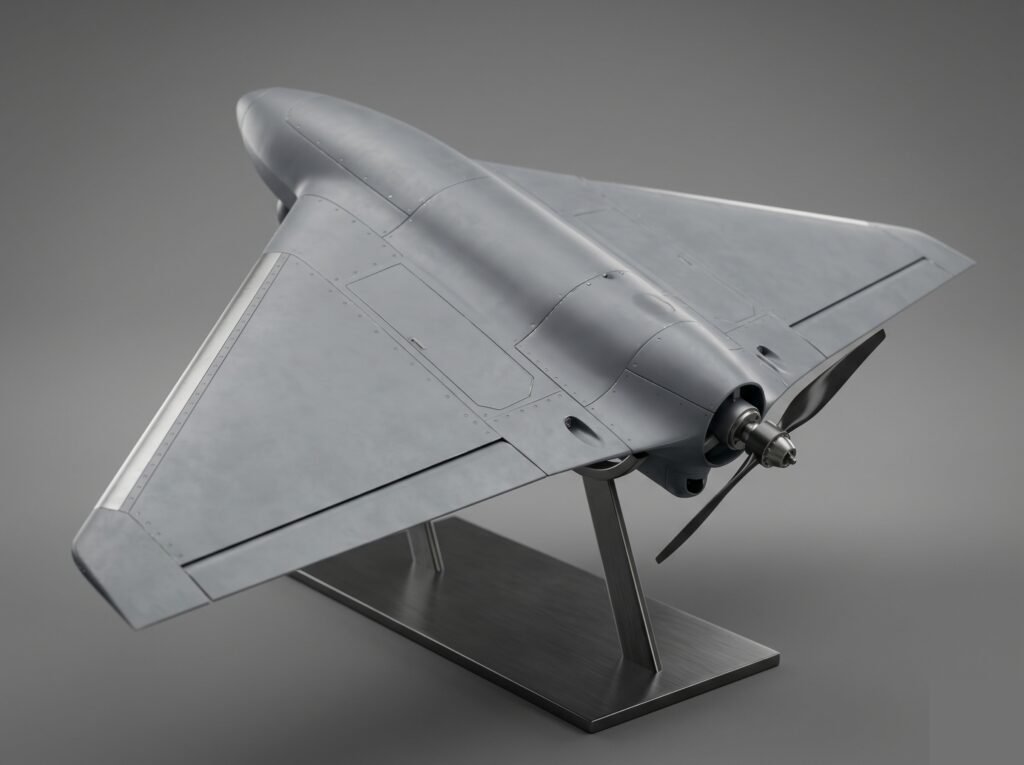
The Shahed 136 is a one-way attack drone — also called a loitering munition or kamikaze drone — designed and built by Iran’s state-owned HESA corporation. It is shaped like a triangle (delta wing), measures 3.5 metres long with a 2.5-metre wingspan, and carries a warhead of 30 to 50 kilograms of explosives. It does not return after launch. Its mission is simple: fly to a target and explode.
The drone is powered by a small two-stroke engine, flies at around 185 km/h, and can travel up to 1,600 km. Crucially, each unit costs roughly $35,000 — a fraction of the millions spent intercepting it. That cost gap is exactly what makes it so effective as a weapon of war.
Why is it so dangerous?
The Shahed 136’s power lies not in individual performance, but in volume. Iran and Russia launch them in swarms — dozens or even hundreds at once — to overwhelm air defense systems. Every time a Patriot missile (costing around $4 million per shot) is used to shoot down a $35,000 drone, the attacker wins economically. Analysts describe this as a strategy of “precise mass” — using cheap drones at scale to exhaust expensive defenses.
Since the 2026 Iran war began, over 2,000 Shahed-family drones have been launched into the Gulf region, targeting military bases, airports, ports, and infrastructure across UAE, Kuwait, and Saudi Arabia.
Russia’s version — the Geran-2
After receiving hundreds of Shahed drones from Iran in 2022, Russia began producing its own version under the name Geran-2, which means “Geranium-2.” Russia has heavily upgraded the original design, adding anti-jamming antennas, a larger 90 kg warhead, and a range of 2,500 km — enough to strike targets across much of Europe. By end of 2025, Russia was producing over 3,000 units per month at its dedicated Alabuga factory. Over 38,000 Geran-2 drones were launched against Ukraine in 2025 alone.
America’s response — the LUCAS drone
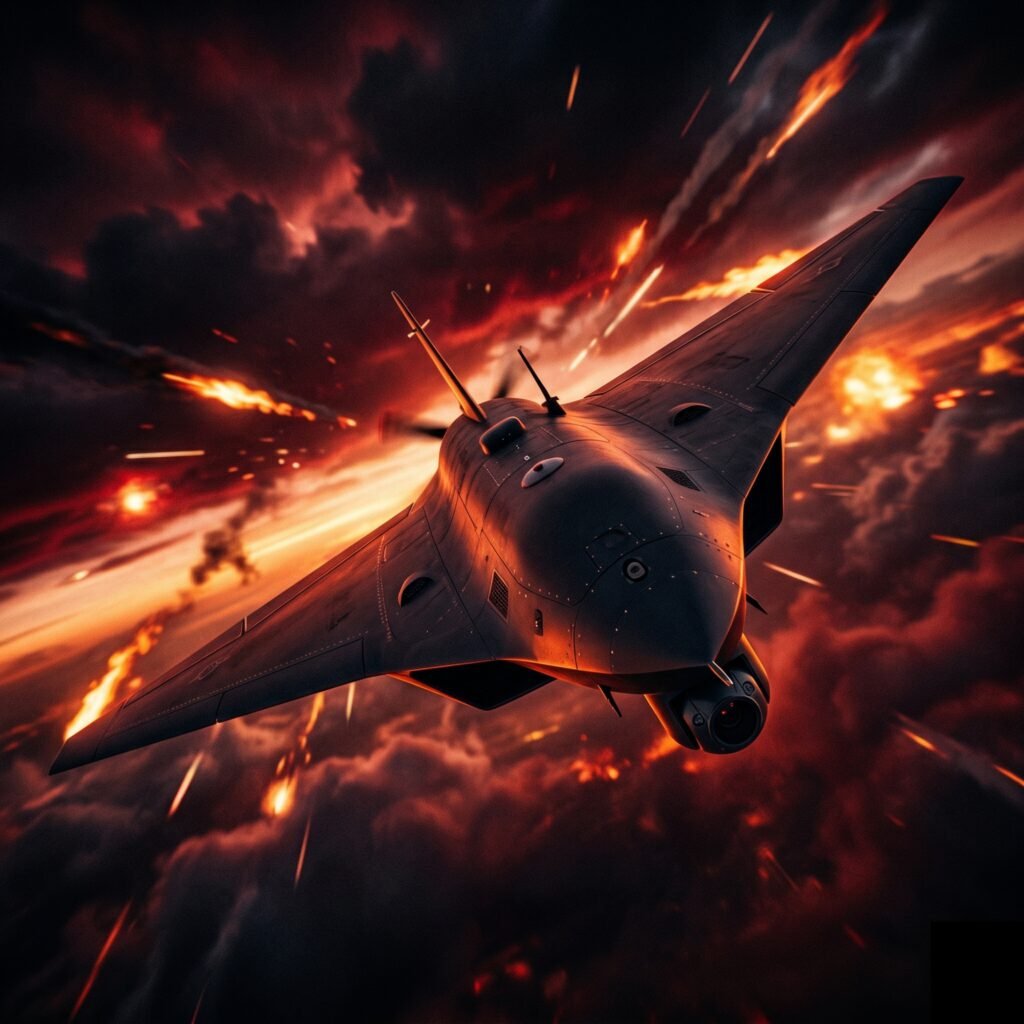
The United States did something unexpected: instead of only defending against the Shahed, it built its own version. In December 2025, the Pentagon deployed the LUCAS (Low-Cost Uncrewed Combat Attack System), a drone reverse-engineered from a captured Shahed 136 by Arizona-based company SpektreWorks. In February 2026, LUCAS was used in combat for the first time — against Iran itself, operated by the military’s Task Force Scorpion Strike in the Middle East. At $35,000 per unit, it matches the Shahed in cost while being significantly lighter at 81.5 kg versus the Shahed’s 200 kg. The US plans to procure over 300,000 domestically produced attack drones by 2027, potentially bringing the per-unit cost down to just $2,000.
| Feature | HESA Shahed-136 (Iran) | LUCAS / FLM 136 (USA) | Geran-2 (Russia) |
| Range | 1,600 km | 1,280 km | 2,500 km |
| Speed | 185 km/h | 194 km/h | ~185 km/h |
| Warhead | 30–50 kg | 18 kg | Up to 90 kg |
| Cost (Est.) | ~$35,000 | ~$35,000 | ~$50,000–$80,000 |
| Weight | 200 kg | 81.5 kg | Not Specified |
| Anti-Jamming | Not Specified | Not Specified | Yes |
What this means for the future of warfare
The Shahed 136 has fundamentally changed how nations think about military technology. It proves that a cheaper, simpler drone can compete with billion-dollar defense systems — not by being better, but by being numerous and affordable. This is a massive shift in military strategy that students and researchers in robotics, AI, and aerospace need to understand. The arms race is no longer just about who has the most advanced technology — it’s about who can manufacture the most drones, the fastest, at the lowest cost.
Ukraine’s own response has been to build interceptor drones costing $2,000–$4,000 each to shoot down incoming Shaheds — drone vs drone warfare is now a reality.
Conclusion
The Shahed 136 started as an Iranian weapon, was adopted by Russia, and has now inspired America’s own counter-version. It represents a turning point in modern warfare — one where a $35,000 drone can reshape geopolitics. For students and researchers in drone technology, this is the most important real-world case study happening right now. The lessons from the Shahed 136 will define how drones are designed, deployed, and defended against for decades to come.